
USFans product pages currently say items are checked and photographed after warehouse arrival, advertise three to seven free HD quality-inspection photos, and describe a five-day period to request a return after arrival. QC images are visual evidence, not a guarantee of authenticity, material composition or long-term durability.
What QC can and cannot prove
Quality-control photos answer a narrow but important question: does the actual item received at the warehouse visibly match what the buyer selected? They can reveal the colour, silhouette, labels, obvious construction, print position, surface damage and included pieces. They are especially useful because seller listings often use edited lighting, sample units or multiple variants on one page.
They cannot prove everything. A photograph does not establish fibre composition, battery health, waterproofing, internal construction, long-term durability or authenticity. It may hide texture and colour differences caused by lighting. Treat QC as risk reduction, not certification. The best decision combines the photos, original listing, price, seller information and the cost of shipping or returning the item.
The standard should also reflect the product and price. A tiny loose thread on an inexpensive sweatshirt is not the same risk as a wrong shoe size, cracked electronic housing or missing bag strap. Define the defects that would change your decision before opening the images. That makes the review consistent and prevents two opposite mistakes: rejecting a usable item because the camera is unflattering, or accepting a costly mismatch because you have already waited for it to arrive.
Prepare a reference before arrival
Save the original listing and selected variant at the time of purchase. Capture the size chart, colour name, product measurements, accessories and any seller detail photos that influenced the order. Without that reference, QC becomes a vague question about whether an item “looks good.” With it, the task becomes a comparison between specific promises and visible evidence.
Write a short private checklist for each item. For shoes it may include size label, outsole colour, toe shape and both sides. For a hoodie it may include chest print, tag, cuffs, zipper and stated measurements. For a bag it may include hardware colour, strap, closure and interior. This takes two minutes before ordering and prevents the most common problem: noticing a missing detail only after international shipment.
Inspect the complete photo set
USFans currently advertises three to seven free HD inspection photos on its product pages. Open the original files where possible instead of judging small dashboard thumbnails. Start with an inventory check: is it the correct type of item, colour, size and quantity? Then compare front, back, sides, labels and any measurement image. Look for areas that are cropped, hidden by packaging or overexposed.
A missing angle is not automatically evidence of a defect, but it is a reason not to make an overconfident decision. If the listing makes a specific area important and that area is absent, request an additional image if the platform offers that option. Ask for one clear view at a time—such as the size label beside a ruler—rather than a general request for “more QC.” Precise requests are easier for warehouse staff to fulfil.
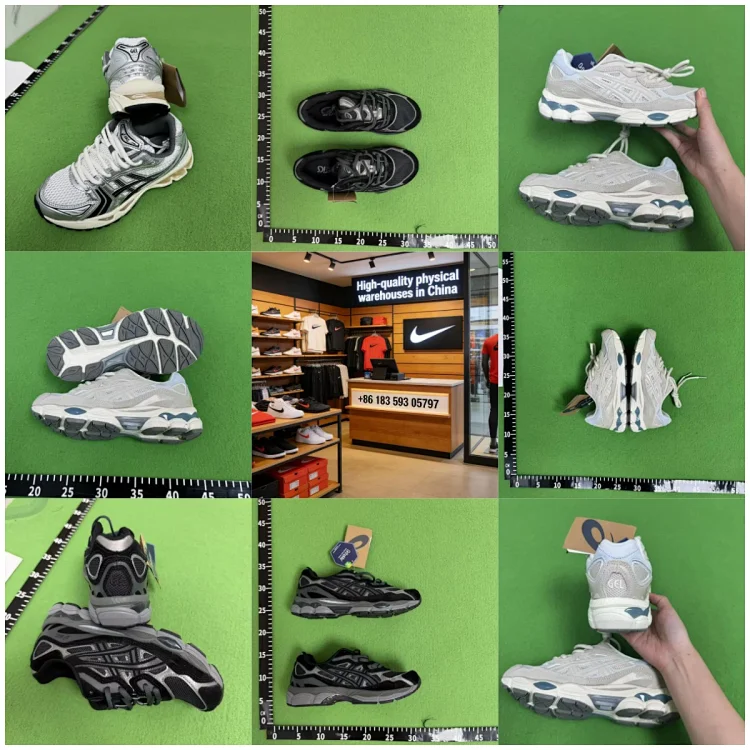
Shoes: symmetry, size and shape
For shoes, compare the left and right units as a pair. Look at overall symmetry, toe shape, panel alignment, stitching paths, glue marks, outsole colour and the way both heels sit. Confirm the size tag and, when measurement photos are available, compare the insole or outsole length with a pair that already fits. Marketplace size labels do not always correspond perfectly across factories.
Small glue traces or loose threads may be acceptable at a low price, while major shape differences, incorrect size or a damaged sole can justify a return request. Decide before international shipping, because footwear is relatively bulky and paying to transport a clearly unacceptable pair rarely makes sense. Keep your judgment proportional: warehouse lighting can exaggerate colour and wide-angle lenses can distort shape near the edge of an image.
Clothing and jerseys: measurements first
For hoodies, shirts and jerseys, the selected tag is only the first check. Compare any warehouse measurement with the seller’s chart and your own garment measurement. Focus on chest width, length and sleeve length when provided. Examine front and back print placement, embroidery, collar shape, cuff construction, zipper alignment and visible stains or pulls.
Printed designs deserve a straight-on view. A tilted garment can make a centred print appear uneven, so use seams and the neckline as reference lines. For jerseys, check the player name, number, patches and chosen version. For dark garments, raise screen brightness carefully to inspect folds without mistaking shadows for stains. If measurements are missing and fit is critical, one additional measurement can be more valuable than several decorative close-ups.
Bags and accessories: function matters
For bags, inspect silhouette, panel shape, handle and strap attachment, closure, hardware colour and any visible edge paint. Confirm that removable pieces shown in the selected variant are present. A beautiful front view does not reveal whether the zipper, buckle or interior is correct, so those areas deserve explicit attention.
Accessories often combine several materials and small parts. Look for bent posts, missing screws, cracked plastic, scratched metal or damaged connectors. For electronics, warehouse photos can confirm model and visible condition but cannot prove battery capacity or full operation unless a separate test is explicitly offered. Do not infer a functional guarantee from a clean photograph.
Decide: keep, ask, or return
Use three outcomes. Keep the item when the visible result matches the selected variant and any imperfections are acceptable for the price. Ask for evidence when one decision-critical detail is missing or ambiguous. Request a return when a clear mismatch, damage or unacceptable construction is already visible. This structure prevents endless inspection while protecting the important decision.
USFans product pages currently describe a five-day return-request window after warehouse arrival. Treat that as a countdown, not a suggestion. Submit the issue with a concise description, the relevant photo and the conflicting listing detail. A return may still depend on seller policy and domestic costs. Do not submit the item to an international parcel while the after-sales request is unresolved.
Create a defensible QC record
Keep the selected listing, warehouse images, measurement notes and any support response together until the parcel arrives. This record helps if the item in hand differs from what the warehouse images showed. It also improves future buying: after comparing warehouse photos with the delivered product, you learn which visual clues were reliable and which angles were misleading.
Use a simple decision note: selected variant, visible result, unanswered question and final action. If you ask support for another photo, write the date because the published return period continues to matter. When approving, record why the visible differences were acceptable. A short contemporaneous note is more reliable than memory weeks later, particularly when several similar products enter the warehouse at different times.
A disciplined QC routine is more useful than chasing a mythical perfect batch. Define what would make you return the item before seeing the photos. Check those points first, respect the return deadline and stop once the evidence supports a decision. USFans supplies the warehouse-photo checkpoint; the value comes from using it carefully before paying to move the item across borders.
Make a measurement photograph interpretable
For clothing, identify whether the photograph shows flat garment width or a circumference. For shoes, identify whether it shows a foot measurement, an insole or an outsole. A number without defined endpoints is weak evidence. Ask for a matching measurement method when the distinction affects your decision.
Keep the complete image alongside your written note. Cropping away the start of a ruler, the garment edge or the selected size label can remove information needed to interpret a discrepancy. Record what is visible and what remains uncertain. An image may support a specific mismatch without proving a universal quality problem with a seller, brand or product category.