
USFans publicly describes support for shopping from Taobao, 1688 and Weidian, warehouse inspection with real photos, three to seven free HD inspection images on product pages, and a five-day return-request window after warehouse arrival. Prices, routes and seller timelines can change, so this guide separates published platform statements from practical buyer judgment.
Understand the two-stage order
Using a shopping agent is not the same as placing a normal domestic retail order. The transaction has two distinct movements. First, an agent purchases an item from a marketplace seller and receives it at a warehouse in China. Second, after the buyer reviews the warehouse result, one or more items are packed and submitted for international delivery. Treating those movements as separate decisions is the simplest way to avoid cost surprises and rushed approvals.
USFans presents its service around Taobao, 1688 and Weidian purchasing, warehouse inspection and global forwarding. That means the marketplace seller remains responsible for the item, its variant and the first domestic dispatch. USFans handles the purchasing request, warehouse intake, inspection-photo stage and later logistics selection. A slow seller is not automatically a slow warehouse, and a poor item is not automatically proof of poor forwarding. Keep those responsibilities separate when reading status updates or asking support for help.
Start with a clean product link
A reliable order begins before payment. Open the original marketplace listing and read the title, variant names, size chart, seller notes, delivery estimate and return limitations. Save the URL and a screenshot of the selected option. Product pages can change after an order is placed; your own record makes it easier to compare what was requested with what eventually reaches the warehouse.
When pasting a link, do not assume the first product image represents every option. Chinese marketplace listings often combine several colours, batches or specifications on one page. Choose the exact colour and size, then use the order remark only for information the selector cannot express. If the price looks dramatically lower than the other options, inspect whether it represents a deposit, accessory or partial component. A shopping agent can execute the order, but it cannot infer an unstated preference with certainty.
Review the order before paying
Before paying for the item, compare the displayed product price with the original listing and check whether domestic delivery or an optional service has been added. Confirm the quantity. A duplicated line or the wrong size is much easier to correct at this point than after the seller ships. Also remember that product payment is not the final landed cost: the international parcel is normally paid later, after warehouse arrival and packing.
USFans product pages describe an estimated time to the warehouse, but an estimate should not be treated as a guarantee. The company has publicly explained that delivery to the warehouse depends on third-party sellers. If an item is time-sensitive, build in a buffer for seller processing, domestic transit, warehouse intake, photos, parcel packing and international transport. A marketing delivery range cannot remove delays created by a seller who has not dispatched.
What warehouse arrival really means
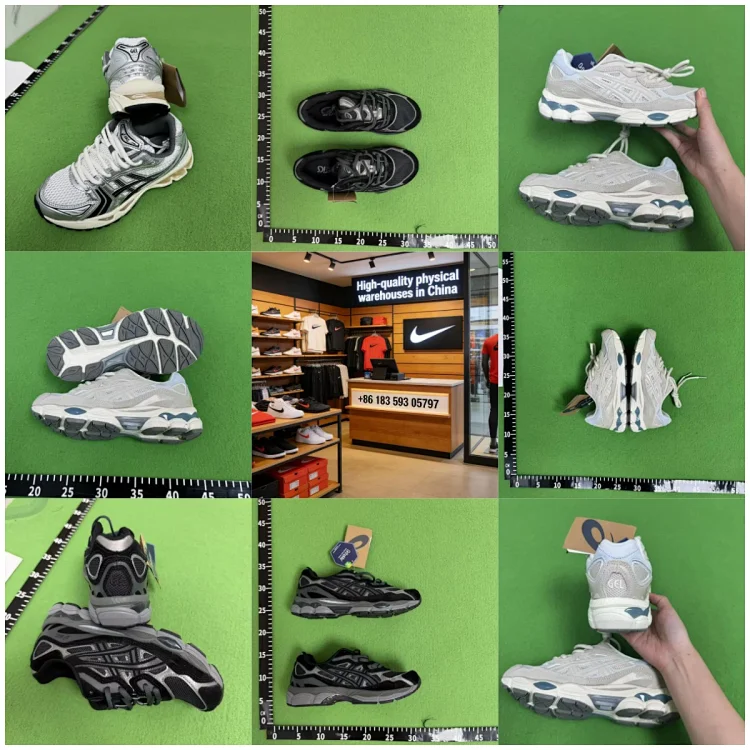
Warehouse arrival is a checkpoint, not the end of the purchase. The item must be received, associated with the correct order and photographed. USFans product pages state that the warehouse checks the item and takes pictures for the customer. They currently advertise three to seven free HD quality-inspection photos. Those images are valuable because they show the actual unit received rather than the seller’s polished catalog photography.
Do not approve an item from the thumbnail alone. Open every image at full size and compare it with the saved listing. Check the selected colour, size label, visible measurements when provided, construction, symmetry, logos or print placement, surface damage and included accessories. If an important area is not visible, decide whether an additional photograph is worth requesting before the return window closes. The purpose of QC is not to find perfection; it is to detect a mismatch large enough to change your decision.
Use the five-day return window carefully
USFans product pages currently say that a buyer dissatisfied after warehouse arrival can apply for a return within five days, after which agents negotiate with the seller on the buyer’s behalf. This is a request window, not an unconditional promise that every seller accepts every return. Some marketplace items have limited after-sales terms, and domestic return freight may apply. The practical lesson is simple: inspect promptly rather than letting the order sit untouched.
If you request a return, describe the issue with observable details. “Wrong size label,” “colour differs from selected black,” or “visible tear near the left seam” is more useful than “quality bad.” Refer to the relevant warehouse image and the saved listing. Keep the item out of parcel submission while the case is open. If the seller rejects the request, ask for the reason and then decide using the evidence and the likely international shipping cost—not frustration alone.
Build the parcel deliberately
Once the items you want are approved, select only those items for parcel submission. Consolidation can reduce duplicated packaging, but a larger parcel is not automatically cheaper or safer. Route restrictions, volumetric weight, parcel-size limits and destination rules can make two smaller packages more practical. The right choice depends on the actual items and the routes shown at submission time.
Remove unnecessary seller packaging only when the savings outweigh the protection it provides. Shoes, structured bags, electronics and fragile accessories have different needs. Consider whether corner protection, moisture protection, reinforcement or a shoe box matters for the item’s shape. Rehearsal or pre-packing information can improve the estimate when available, but always review what the service includes instead of assuming it guarantees a particular final weight.
Compare shipping with final data
The lowest displayed shipping number is not enough for a good route decision. Compare the final packed weight and dimensions, billable-weight rule, estimated transit range, tracking level, prohibited-item rules, compensation terms and destination-country handling. A route that accepts ordinary clothing may reject batteries, liquids or branded goods. Availability can also change, so a route mentioned in an old tutorial may not be available for your parcel today.
International delivery estimates are ranges rather than appointments. Export processing, flight capacity, customs and local carriers are outside the warehouse’s full control. Save the parcel declaration and tracking number, then watch for a real carrier acceptance scan rather than only a label-created event. If tracking stalls, provide support with the parcel number, route and last physical scan. Specific evidence usually produces a more useful answer than repeatedly asking where the parcel is.
A first-order checklist that works
For a first order, start with a small number of items you can afford to wait for. Save each original listing, verify every variant, record the product payment, and set a reminder to inspect warehouse photos. Use the published five-day window as a hard personal deadline. Keep screenshots of visible defects and resolutions. At parcel stage, compare at least two suitable routes and review the final package data before payment.
Most avoidable mistakes come from skipping a checkpoint: assuming a variant, approving tiny photos, missing a return window or treating an estimate as a promise. The agent model works best when the buyer uses the information the warehouse provides. USFans can purchase, photograph, store and forward; the buyer still has to decide whether the received item matches expectations and whether the final shipping option makes financial sense. That shared responsibility is the honest way to approach the service.
Keep the order record useful
Create one record for each selected option, including the original marketplace URL, title, colour, size, quantity and purchase date. Add the domestic tracking information only when the seller provides it, and keep warehouse arrival separate from parcel dispatch. These distinctions prevent a single ambiguous status from becoming a misleading delivery promise.
Before international submission, revisit the same record. Confirm that every retained item has been checked, that any return or correction request is resolved and that the parcel quotation uses the final package information. Keep the final selected route and paid amount together. This makes later questions easier to investigate and helps you compare the actual order with your original budget.